
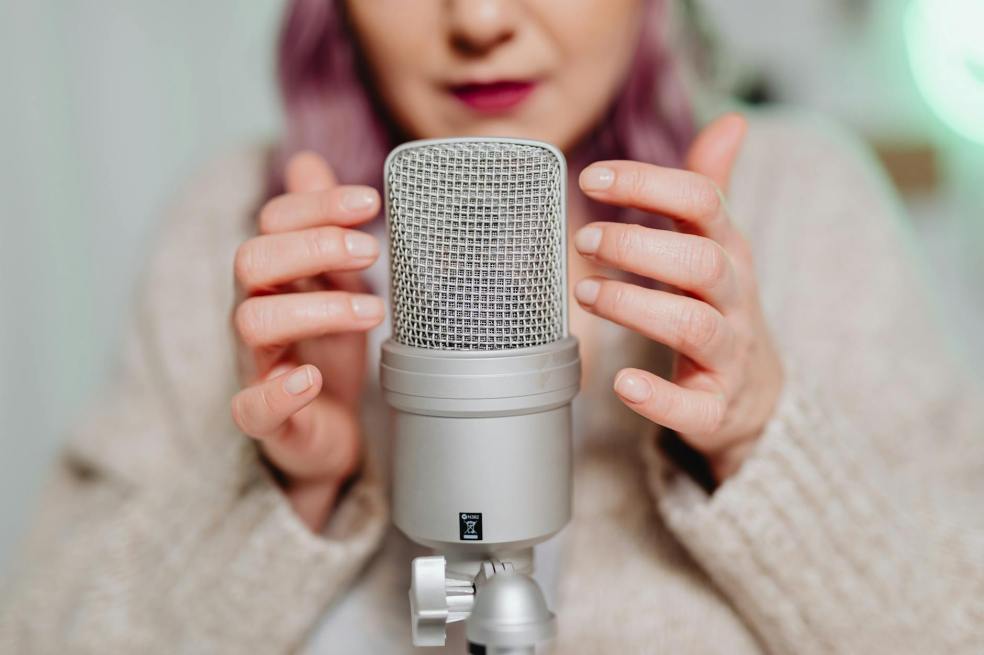
How everyday sensations can induce relaxation.

(Image by Freepik)
Have you ever wondered what it would feel like to be touched by sound…literally?
Before answering, think of things in life that can make you feel calm and relaxed. It could be as simple as hearing the wind blowing against the trees or the ocean waves splashing.
As satisfying and soothing as those sounds are, you’d also know that nature isn’t the only source of comforting noises.
This is the intention of the autonomous sensory meridian response, known as “ASMR.” It stimulates your brain through visual and auditory sensors that trigger a response such as relaxation or pleasure.
For example, popular YouTuber ‘ASMR Zeitgeist’ creates experimental ASMR videos to help viewers/subscribers tingle, sleep, and relax. Using 2 microphones, he mimics a “3D” audio effect to make it appear like the viewer/listener is close to the triggers.
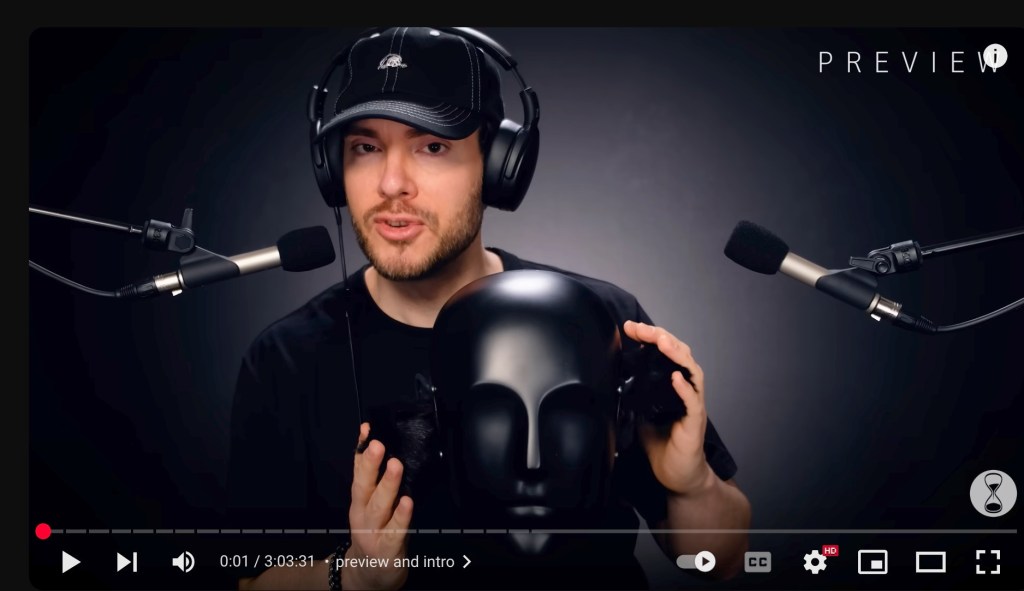
In the video, you can see/hear burning marshmallows, soft drinks fizzing, and foaming shaving cream being pumped out of the can. Most of these triggers were requested by subscribers or viewers who find relaxation in “odd” noises.
Around 15 years ago, ‘WhisperingLife ASMR’ posted what is considered to be one of the earliest ASMR videos. In her video, she whispers into the microphone and says she loves hearing others whisper because it is soothing. After that, she posted a series of whispering videos describing herself and even started reading (while whispering) books on her channel.
According to the results of an NCBI study from 2022, the findings stated, “…ASMR decreases feelings of depression in individuals who are sensitive to ASMR. Moreover, ASMR videos reduce heart rate in individuals, irrespective of being sensitive to ASMR or not.”
Popular ASMR triggers include whispering, scratching, typing, hair play, and hand movements that can induce a tingling sensation in the listeners’ skin, neck, and upper spine.
However, this may not be the case if you experience misophonia.
Once considered taboo, ASMR has been growing increasingly popular since its “birth” back in 2009 and has grown visually and audibly as well. Videos such as “ASMR Roleplay” have been introduced to optimize visual/audio aspects of ASMR.
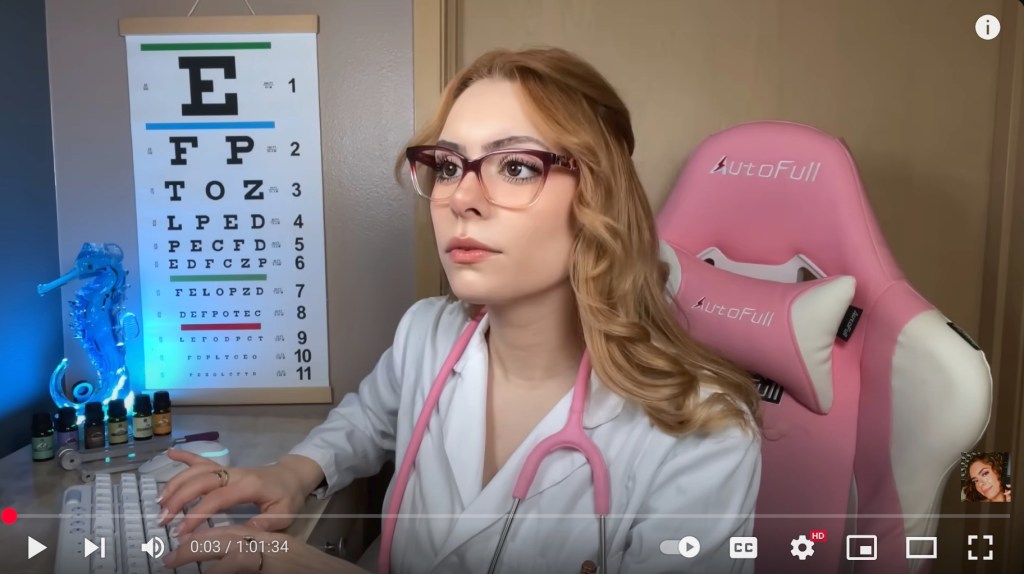
Another example can be seen with ‘Celaine’s ASMR.’ In her video, Celaine is dressed up as a Doctor preparing to conduct a cranial nerve exam for the viewer/listener. She tests the eyes, and ears through a series of hand and light movements close enough to the camera to create an in-person checkup experience.
Typically in these types of videos, the ASMR “artist” asks and “responds” to the viewer as if they are too present.
According to a study by Peerj.com, “The most common time for engagement with ASMR media was reported to be before going to sleep at night, with 81% of participants reporting this as their preferred time.” In addition, they reported that at least 75 percent of participants were triggered by whispering and 69 percent by personal attention.
Using headphones to watch can also amplify the listener’s overall experiences with ASMR.
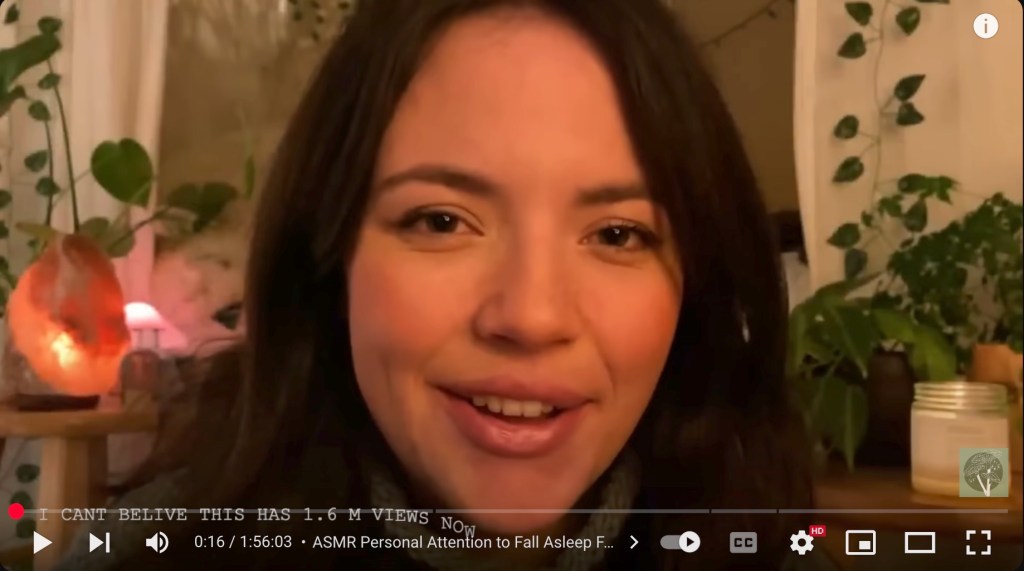
Personal attention videos involve the ASMR “artist” usually whispering into the microphone while asking the viewer how they are doing. They try to reduce anxieties or worries through popular triggers such as makeup application and close camera contact to induce feelings in the cranial nerve.
‘Whispering Willow ASMR’ posted a personal attention video which you can watch below:
USA Today said, “Since ASMR appears to activate regions of the brain associated with calming, sleep-inducing hormones like dopamine and oxytocin, ASMR could possibly help some users sleep better.”
Nonetheless, ASMR (the type that does not involve eating or strange role play) benefits those looking for a good night’s sleep. Otherwise, the more aggressive (and odd) videos might be too distracting before bedtime.
First Monday.Org stated, “Empathy is also an important component in the ASMR experience, as “[…] the more you connect and empathize with a particular trigger, the stronger the ASMR reaction you will have to that triggering event” [20].”
This creates a feeling of security between the viewer/creator. It is common among ASMR “artists” to be seen meticulously “performing” triggers as they are seen as the “experts” in the field.
Although ASMR is popularized in certain contexts, many social media consumers don’t understand its benefits and consider it “weird” or “strange.” Many are still unaware of what ASMR is and how it works but, there is a slight chance that watching an ASMR video will change your perspective (even if it seems cringey.)
There is no denying that exposing yourself to ASMR can feel a bit illegal. This is because it is still a growing community stigmatized for being generalized as embarrassing, unsettling, and sometimes creepy. It is about finding the right ASMR “artists” who can make sense of its phenomenon.
Even if these videos are shared all over the internet for the world to see, they were meant to be watched in your downtime to create an ultramodern audio/visual personal experience!
 The 21st Century Girly Blog